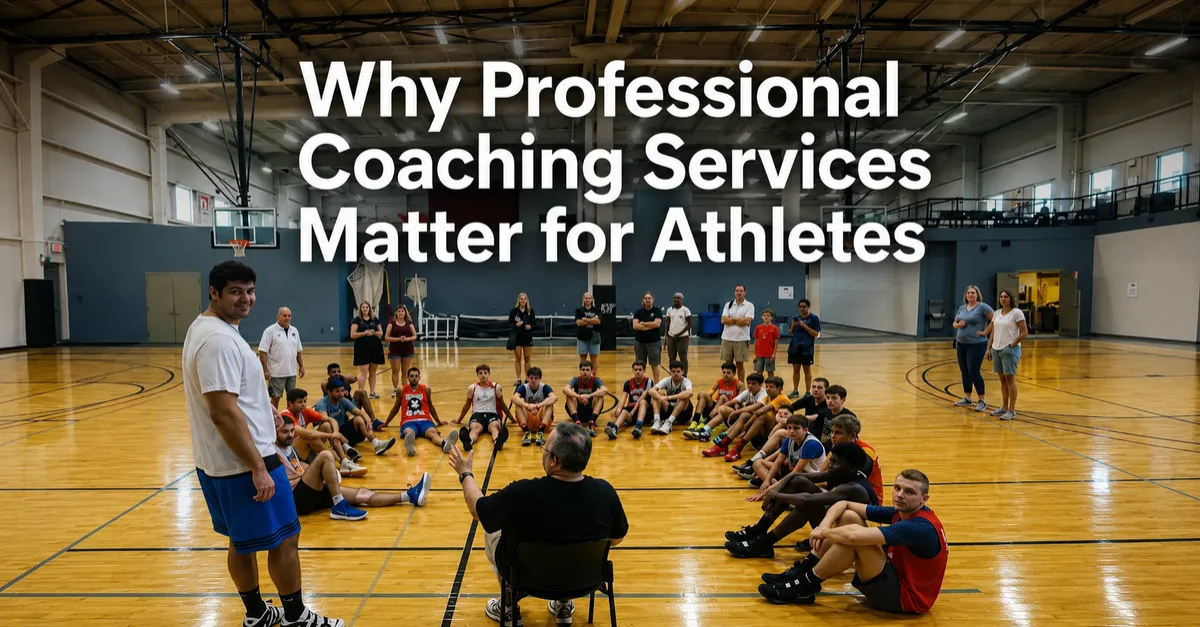
Why Professional Coaching Services Matter for Athletes
Every athlete wants to improve, but improvement does not happen from effort alone. Talent matters. Hard work matters. But without the right direction, athletes can spend months practicing the wrong habits, repeating the same mistakes, or training in ways that do not translate to real competition.
That is why professional coaching services are so important.
Professional coaching gives athletes structure, correction, accountability, and a clear development plan. Instead of guessing what to work on, athletes receive guidance based on their current skill level, position, goals, weaknesses, and game performance.
The right coach can help an athlete sharpen fundamentals, improve decision-making, build confidence, and better understand how to compete at a higher level.
For basketball players, this matters even more. The game is fast, physical, and strategic. Athletes need skill development, defensive discipline, film understanding, conditioning, communication, footwork, mentality, and real-game awareness.
Strong training programs help connect all of those pieces.
At Gibbons & Gibbons Academy , athletes, parents, coaches, and teams can access professional coaching services designed around player development, team improvement, game planning, scouting, strategy, and recruiting support.
What Are Professional Coaching Services?
Professional coaching services are structured development programs led by experienced coaches who understand how to evaluate athletes, teach skills, correct technique, and connect training to competition.
These services can include individual training, group sessions, team development, film review, scouting reports, game strategy, recruiting guidance, and performance planning.
Unlike casual workouts, professional coaching is intentional. Every drill, correction, and teaching point should connect to a larger goal.
For example, a basketball player may need help with defensive stance, footwork, positioning, shooting mechanics, ball handling, decision-making, confidence, or game IQ.
A team may need help with transition defense, half-court defense, rotations, communication, and accountability.
1. Athletes Need a Clear Development Plan
Many athletes train hard but do not always know what they should prioritize.
They may work on flashy moves, random drills, or workouts they see online. While that effort can be useful, it may not address the areas that actually affect game performance.
A professional coach helps create a clear development plan.
A Development Plan May Include
This type of structured approach helps athletes understand what to work on, why it matters, and how each area connects to overall performance.
Explore One-on-One Personal Training
Get focused coaching built around your position, current ability, goals, strengths, weaknesses, and next steps.
Explore Personal Training →2. Coaching Helps Correct Bad Habits Early
Bad habits are one of the biggest barriers to athletic development.
An athlete may be talented, but consistently using poor footwork, weak posture, slow reactions, or rushed decision-making can limit performance.
The challenge is that athletes often do not notice their own mistakes. They may feel as though they are working hard without realizing that their stance is too high, their closeout angle is wrong, or their positioning is late.
Professional coaching gives athletes immediate feedback.
In basketball, a coach may focus on hand placement, defensive angles, body balance, communication, timing, footwork, and anticipation.
Correcting small details early can help athletes build cleaner habits that hold up better when the game speeds up.
3. Training Programs Build Consistency
Athletic growth does not come from one great workout. It comes from repeated, focused training over time.
That is why structured training programs matter.
Instead of jumping from one unrelated workout to another, athletes follow a development progression that builds skills in a logical order.
A defensive player may begin with stance and footwork before adding closeouts, containment, help positioning, rotations, screen coverage, and more advanced reads.
The same applies on offense. Balance, ball control, shooting mechanics, spacing, passing reads, and decision-making create the foundation for reliable game performance.
Professional coaching turns training into a progression. Each session can build on the one before it.
4. Personalized Coaching Targets the Athlete's Actual Needs
Every athlete has different strengths, weaknesses, goals, and learning styles.
Some athletes need more confidence. Some need better conditioning. Others need sharper fundamentals, stronger defensive habits, or more film study.
Personalized coaching allows training to match the athlete rather than forcing every player through the same generic workout.
Individual attention can also make feedback more specific. The coach can adjust drills, pacing, teaching points, and priorities based on what the athlete actually needs.
Coaching Paths for Players, Teams, and Families
Not every athlete needs the same type of support. The right path depends on the goal, current level, and challenges that need the most attention.
Individual sessions can focus on specific skill needs, position work, confidence, movement, and personal performance goals.
Group coaching can build shared standards, communication, accountability, execution, and team habits.
Film analysis and tactical planning can help identify tendencies, breakdowns, adjustments, and game-specific priorities.
Athletes and families can benefit from a clearer understanding of timelines, next-level opportunities, expectations, and planning.
5. Coaching Improves Game IQ
Skill is important, but athletes who understand the game have another advantage.
Game IQ helps athletes read situations, anticipate plays, make better decisions, and understand how their actions affect teammates.
A player with strong game awareness knows when to help, when to stay home, when to rotate, when to attack, when to pass, and when to slow the game down.
Professional coaching can develop this understanding through film study, situational training, scouting, tactical teaching, and repeated decision making.
Explore Game Planning & Opponent Scouting
Use opponent tendencies, film analysis, tactical breakdowns, and actionable adjustments to prepare with greater purpose.
Explore Game Planning →6. Professional Coaching Builds Confidence
Confidence does not come from hype alone. Real confidence often comes from preparation.
When athletes know they have trained properly, corrected weaknesses, practiced important situations, and improved their understanding, they can compete with greater trust in their preparation.
Coaching also gives athletes feedback on what they are doing well and what still needs attention.
That can be especially valuable for younger athletes who hesitate during games or struggle to trust their instincts.
7. Athletes Learn Accountability
Professional coaching teaches athletes that improvement requires accountability.
It is not enough to simply show up. Athletes must listen, apply feedback, compete, communicate, and take responsibility for their own development.
Sports also teach habits, attitude, teamwork, discipline, and response to adversity.
Accountability learned through training can influence how athletes approach school, leadership, teamwork, and personal goals outside basketball.
8. Coaching Helps Teams Build Identity
Team development requires more than collecting talented players.
A group can still struggle if athletes do not communicate, rotate, defend, or understand their roles within the same system.
Professional coaching helps teams establish shared language, expectations, standards, and strategies.
Team training can address transition defense, full-court and half-court concepts, positioning, footwork, communication, screen coverage, rotations, decision-making, and accountability.
When athletes understand how to work together, individual effort becomes easier to connect to team performance.
Explore Team & Group Training
Build communication, shared standards, basketball skills, and team discipline through structured group coaching.
Explore Team Training →9. Film Review Makes Training More Accurate
Film can reveal things athletes and coaches may not notice during live competition.
Games happen quickly. Film gives everyone an opportunity to slow the action down and study decisions, positioning, effort, spacing, communication, and timing.
Coaches may identify defensive breakdowns, poor shot selection, missed rotations, bad angles, transition problems, spacing issues, or opponent tendencies.
That makes future training more specific because the plan is based on real game evidence instead of assumptions.
10. Coaching Supports Recruiting and Long-Term Goals
Some athletes want to compete at the next level. That goal requires more than talent.
Athletes and families may need to understand timelines, expectations, communication, exposure, development priorities, and realistic pathways.
Professional recruiting guidance can help families approach these decisions with more information and a clearer strategy.
Even for athletes who do not pursue college sports, long-term planning still matters. Coaching can help players set goals, stay disciplined, and build confidence through structured development.
11. Professional Coaching Helps Parents Understand Development
Parents often want to support their athletes but may not know which type of training is most useful.
A player may need more skill work, more competition, film review, team training, conditioning, or recruiting guidance.
A professional coach can provide another perspective on where the athlete is now and what steps may make sense next.
Strong coaching can also help create realistic expectations. Development takes time and is usually built through consistent training, feedback, repetition, competition, and patience.
12. The Right Coach Teaches More Than Drills
A good coach does not only run workouts.
A good coach teaches athletes how to think, prepare, compete, communicate, and respond.
Effective training programs help athletes understand why they are doing each drill and how it should transfer into game situations.
This is what separates professional coaching from basic exercise.
The goal is not simply to make an athlete tired. The goal is to help the athlete become more capable.
13. Professional Coaching Creates a Roadmap
Athletes need direction. Without a roadmap, progress can feel random.
A professional coach can help define the next steps, whether that means improving fundamentals, building defensive discipline, increasing confidence, studying film, learning team concepts, or preparing for next-level opportunities.
A Strong Development Roadmap Answers Questions Like:
Explore Recruiting Support
Get guidance around recruiting timelines, opportunities, planning, and decisions that can shape an athlete's next step.
Explore Recruiting Support →Key Takeaways
Conclusion
Professional coaching services matter because athletes need more than effort. They need direction, correction, structure, accountability, and a clear plan for growth.
The right training programs help athletes understand what to improve, how to improve it, and how those improvements should translate into real games.
For young players, coaching can build confidence and fundamentals. For serious athletes, it can sharpen performance and decision-making. For teams, it can strengthen identity, communication, and tactical understanding.
Athletic development is not about doing more random workouts. It is about doing the right work with the right guidance.
That is why professional coaching services can be such a valuable part of an athlete's development.
