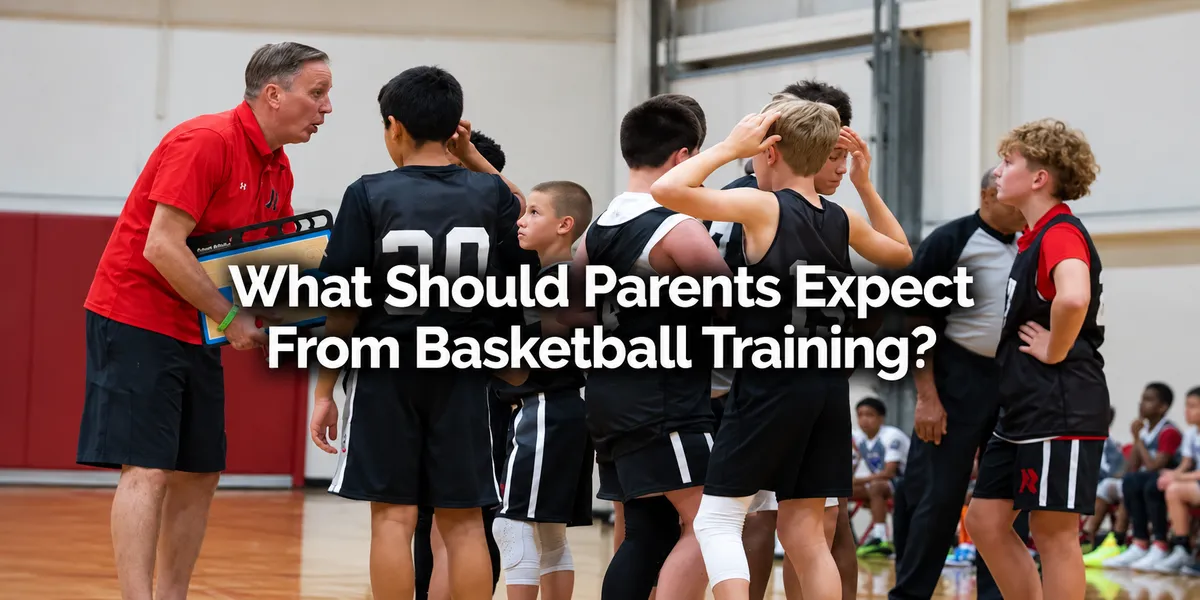
What Should Parents Expect From Basketball Training?
Dropping your child off for their first basketball training session can feel like a bit of a leap of faith. You know they're excited, but you might not know exactly what happens once they walk through the gym doors. Good training isn't just extra shooting reps or a scrimmage with a whistle. It's a structured process built around skill development, discipline, and basketball IQ, and knowing what to expect can help you support your young athlete through it.
Whether your child is just starting out or moving into more competitive play, the experience tends to follow a few predictable patterns. Here's what parents can realistically expect, from the first few sessions to the habits that stick long after the season ends.
What Basketball Training Actually Involves
At a good program, training is less about drills for the sake of drills and more about building specific, repeatable skills. Coaches break sessions into pieces: ball handling, footwork, shooting mechanics, and reading the floor. Younger or newer players usually spend more time on fundamentals, while advanced players layer in game-speed decision-making. Every session usually has a stated goal, whether that's tightening up a crossover or improving help-side defense, so training rarely feels like busywork.
Individual Skill Work
Some of the most noticeable progress happens in one-on-one settings, where a coach can watch a player's mechanics closely and correct small habits before they turn into hard-to-break ones. If your child struggles with something specific, like a weak-hand dribble or a slow shooting release, personal training sessions are usually where that gets fixed fastest.
Explore One-on-One Personal Training
Use individual coaching to target footwork, stance, technique, and specific player weaknesses that may be harder to address during full-team sessions.
View One-on-One Training →Team-Based Sessions
Other sessions focus on how your child plays with others: communication, spacing, and reacting to teammates in real time. These group training sessions are where kids learn to turn individual skills into actual game situations, which is a different (and often harder) skill than it sounds.
Explore Group Training & Team Sessions
See how structured team sessions can support conditioning, communication, defensive habits, and shared accountability.
Explore Group Training →Why Defense Gets Extra Attention
If your child's training feels heavier on defense than you expected, that's usually intentional. Plenty of youth basketball training programs spend most of their time on scoring, since that's what shows up on the highlight reel. A defense-first approach tends to produce more complete players instead, because defense requires discipline, communication, and accountability, not just raw athleticism. A player who can score twenty points but gives up twenty-five isn't actually helping the team win, and coaches who prioritize defense are usually building players who impact winning, not just their own stat line.
Kids who train this way learn to read screens, communicate switches, and hold their position under pressure: skills that translate to every level of the game. It can look less flashy in the moment. It tends to pay off once the season actually starts.
What Changes for Your Child in the First Few Weeks
The first few weeks of any new training program come with an adjustment period, and this kind of training is no different.
Physical and Skill Adjustments
Expect some soreness, especially if your child hasn't trained with this much structure before. Footwork drills and defensive slides use muscles that casual pickup games don't. Skill-wise, don't be surprised if your child's shot looks a little off at first. Coaches often rebuild mechanics from the ground up, and that temporary dip is a normal part of the process, not a sign something is wrong.
Confidence and Mental Growth
The mental side often shifts faster than people expect. Kids who used to hesitate before calling for the ball or communicating on defense tend to speak up more within a few weeks. That confidence usually comes from repetition. Once a skill feels automatic, kids stop overthinking it and start playing.
How Coaches Build a Real Training Program
The quality of a training program comes down to the coaching behind it, not just the drills written on a whiteboard. At Gibbons & Gibbons Academy, that starts with coaching experience that goes well beyond youth sports. Programs led by coaches with real college and professional-level experience tend to structure training differently, with fewer generic drills and more of the habits that get taught at higher levels of the game.
Game Planning and Scouting for Advanced Athletes
For older or more competitive players, training can go beyond skill work into actual game planning and scouting. This is where athletes start learning to study opponents the way college and professional players do.
What Goes Into a Scouting Report
A basic scouting report usually covers an opponent's go-to plays, their strongest scorers, and their tendencies in specific situations, like who they trust with the ball late in a close game. Learning to read this kind of information is its own skill, and it's one that separates players who react from players who anticipate.
Coaching Support Beyond the Court
Good programs also make room for conversations that happen off the court entirely. Coaching calls and strategy consulting give parents and athletes a chance to talk through goals, playing time, or what comes next, without waiting for a chance encounter at pickup.
Explore Coaching & Strategy Consulting
Build a clearer connection between how your athletes train and the defensive systems, assignments, and game plans they're expected to execute.
Explore Strategy Consulting →Signs Your Athlete Is Getting Real Value
It's fair to wonder whether training is actually working, especially in the first month or two. A few signs tend to show up before the stats do. Your child talks about specific skills they're working on, not just "basketball stuff" in general. They start applying training habits in games without being reminded. Coaches can point to concrete areas of improvement instead of vague encouragement. You might also notice them watching basketball differently, picking up on things like spacing or a missed rotation they never used to catch before.
Quality youth basketball training should feel purposeful. If every session looks the same no matter what your child needs to work on, that's worth asking about.
How Parents Can Support Training at Home
You don't need to run drills in the driveway to help your child improve, though it doesn't hurt. The most useful thing most parents can do is reinforce the process instead of just the results. Ask what they worked on instead of just what the score was. Encourage them to show up even on the days they'd rather not.
Training works best as a partnership between the coach, the athlete, and you. Once you know what to expect, from the early soreness to the slow build of confidence, it's easier to trust the process and notice the progress happening underneath it. If you're ready to see what a structured program could look like for your child, booking a coaching call is a good place to start.
Explore Gibbons & Gibbons Academy Services
Compare team training, personal sessions, strategy consulting, recruiting support, and other development options for your athletes or program.
Explore All Services →Frequently Asked Questions
At what age should my child start basketball training?
Most programs work with athletes from middle school through college, adjusting drills and intensity to match age and skill level. Younger kids typically focus on fundamentals, while older athletes add game strategy and scouting. If you're unsure where your child fits, a coach can usually tell within the first session or two.
What's the difference between personal training and group training?
Personal training focuses on individual skill correction with one-on-one coaching attention, which is useful for fixing specific mechanics quickly. Group training focuses on applying those skills in team settings, like communication and spacing. Many athletes benefit from a mix of both over time.
How often should young athletes train each week?
This depends on the athlete's age, season, and goals, but two to three sessions a week is common outside of a heavy game schedule. More isn't always better, especially for younger kids who also need rest and recovery. A coach can help build a schedule that fits your child's actual workload.
Will basketball training interfere with my child's school team practice?
Good programs are designed to complement school team training, not compete with it. Sessions usually focus on individual skill development that supports whatever system the school team runs, so ask how a program handles that before you sign up.
What should we expect from a coaching call?
A coaching call is typically a conversation about your child's goals, current skill level, and what a training plan could look like. It's also a chance to ask about coaching philosophy, scheduling, or recruiting support if that's relevant. Most parents find it useful before committing to a full program.
How is training different for high school athletes versus middle schoolers?
High school training tends to add more game-speed decision-making, scouting, and recruiting-focused conversations, since the stakes and competition level are higher. Middle school training usually stays closer to fundamentals: ball handling, footwork, and basic defensive positioning. Both levels benefit from the same disciplined coaching approach, just applied differently.
