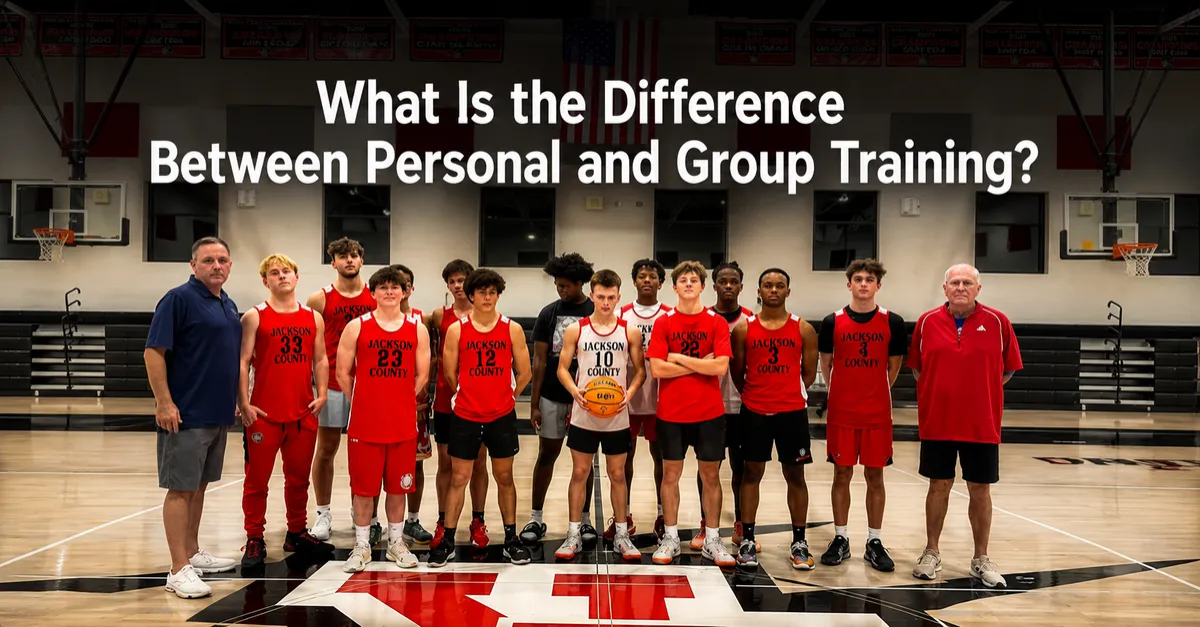
What Is the Difference Between Personal and Group Training?
If you're trying to decide between personal and group training for a young basketball player, you're probably weighing two things: how much individual attention they need, and how much game-speed pressure will actually move the needle.
Both formats work. They simply solve different problems.
Personal training zeroes in on one athlete's mechanics, decision-making, and confidence. Group training builds communication, defensive reads, and habits that only show up once other players are moving around the court.
The right starting point usually comes down to where the athlete is stuck right now.
What Personal Training Looks Like
Personal training is built around one athlete and one development plan.
A session can focus on a specific weakness, role, skill, or decision that needs more attention than a normal team practice allows.
Maybe a guard needs cleaner footwork. Maybe a forward keeps reacting late defensively. Maybe a player needs more controlled repetition before a tryout.
Athletes who want that kind of dedicated attention can explore one-on-one personal training through Gibbons & Gibbons Academy.
Who Personal Training Fits Best
Personal sessions tend to make the most sense when an athlete has a specific individual goal that needs concentrated coaching.
Common Reasons Players Choose One-on-One Sessions
Tryout preparation, correcting a coach-identified weakness, improving footwork, refining decision-making, building confidence, or simply getting more focused reps than team practice allows.
What Group Training Looks Like
Group training solves a different problem. It teaches players how to execute when other athletes are moving, communicating, cutting, screening, and making decisions at the same time.
Sessions can run with small groups, position groups, or teams, allowing athletes to work on concepts that cannot be realistically recreated alone.
The focus can include transition defense, half-court rotations, communication, positioning, and competitive live reps.
Learn more about group and team training if your athlete needs more game-like pressure and shared decision-making.
Who Group Training Fits Best
Group training works especially well for teams preparing for a season, position groups learning shared reads, or athletes who need to become more comfortable making decisions at game speed.
Personal Training vs. Group Training
Both formats develop players. The difference is the type of problem each one is designed to solve.
Best when the athlete needs concentrated work on individual skills, habits, mechanics, or confidence.
- Individual coaching attention
- Targeted skill development
- Immediate rep-by-rep feedback
- Personal development goals
Best when the athlete needs communication, rotations, live reads, and competitive reps against other players.
- Game-speed decisions
- Team communication
- Defensive rotations
- Competitive live reps
Personal and Group Training: Which One Fits Your Athlete?
Personal and group training are not competing options. They're tools built for different stages of development.
Personal training is about precision: one athlete, targeted coaching, and control over exactly what gets worked on.
Group training adds pressure, communication, teammates, opponents, and decisions that have to happen in real time.
At Gibbons & Gibbons Academy , an athlete's training path can include both depending on what their game needs at a particular point in the season.
Quick Way to Choose
Cost and Session Structure
Personal sessions can make sense for athletes who want concentrated development, while group training distributes coaching time across several athletes and creates a more competitive environment.
Families planning a longer development period may also consider multi-session options rather than treating every session as an isolated workout.
Choosing Between a Single Session and a Package
A single session can be useful when evaluating the format or addressing one immediate concern.
A longer series of sessions is generally better suited to athletes working toward meaningful changes in mechanics, decision-making, defensive habits, or overall development.
When to Use Both Together
Many strong development plans use personal and group training together.
Personal training allows the coach to isolate and correct a problem. Group training then reveals whether the correction still works when the player has to process movement, pressure, and teammates.
Once athletes move beyond basic development, another layer can become important: game planning and opponent scouting .
That work connects individual and team development to the actual situations an athlete or team expects to face in competition.
Explore Game Planning & Opponent Scouting
Turn development work into a clear tactical plan for upcoming opponents, defensive situations, and game-day decisions.
Explore Game Planning →Making the Call for Your Athlete
If you're still stuck between personal and group training, start with the actual problem you want to solve.
A specific technical flaw, confidence issue, position change, or individual tryout goal points toward personal training.
Communication problems, defensive rotations, decision-making under pressure, or difficulty translating practice skills into games point more strongly toward group training.
Coaches looking at development across an entire program may also benefit from coaching calls and strategy consulting to create a more consistent structure across the season.
There's no wrong starting point when the plan is built around the athlete's actual needs.
The goal is the same regardless of format: better decisions, fewer breakdowns, stronger habits, and more confidence when the game speeds up.
Build a Stronger Development Strategy
Get an outside perspective on practice structure, defensive systems, player development, and the areas your program needs to sharpen.
Explore Coaching Strategy →