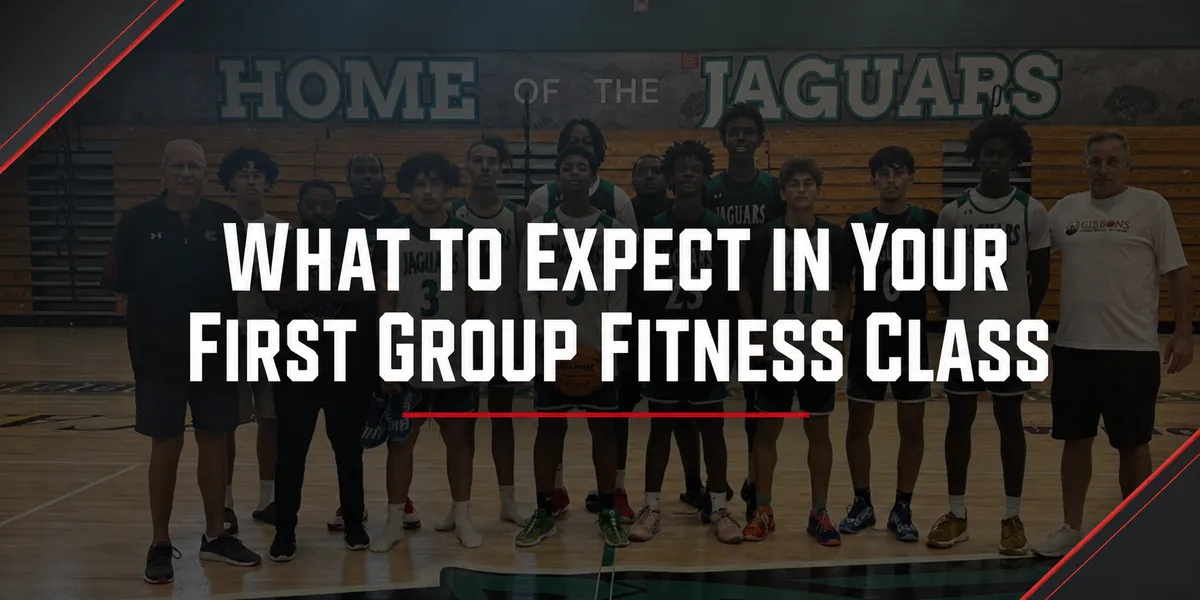
What to Expect in Your First Group Fitness Class
Walking into your first group fitness class comes with a very specific kind of nerves. You don't know where to stand, how hard the work is going to be, or whether everyone in the room has been doing this for five years already.
That mix of curiosity and hesitation is normal, and it usually burns off about fifteen minutes in. Most first-timers overestimate how much attention is on them and underestimate how much structure is built into the hour. Here's an honest look at what actually happens, what to bring, and how to walk out feeling like you belonged there the whole time.
What Actually Happens in Your First Group Fitness Class
Almost every session follows a rhythm. Once you know the rhythm, the guesswork disappears.
Check-in and warm-up
Show up ten to fifteen minutes early. That buffer gives you time to sign in, introduce yourself to the coach, mention any injuries or limitations, and pick a spot on the floor.
Coaches want to hear that your ankle has been bothering you or that you haven't trained seriously since last season. It changes what they ask of you and how they correct you.
The warm-up usually runs eight to twelve minutes. Expect light movement, some mobility work, and a few drills that preview whatever is coming later. Well-run group training sessions use that warm-up as a scouting report too.
The working portion
This is the bulk of the hour. Depending on the program, you might rotate through stations, work with a partner, or move through timed intervals as one full group. The coach demonstrates each movement, then walks the floor correcting technique while everyone works.
You are not expected to know the terminology. If someone calls out a drill name you've never heard in your life, watch the demonstration and copy what you see. Asking a question out loud is far better than guessing quietly and doing it wrong for twenty reps.
How coaches scale the work for beginners
Any group program worth joining is built to flex. Same drill, different intensity. If the room is doing full-speed closeouts, you might run them at half speed with your attention on footwork instead of pace. If there's added weight, you start lighter.
Experience a Gibbons & Gibbons Group Training Session
Train in a structured environment built around movement, communication, accountability, and progressive coaching.
Explore Group Training →What to Bring to Your First Session
The short list
Water, a towel, shoes that match the surface, and clothing you can move in without adjusting every thirty seconds. If the session runs on a court, wear proper court shoes with real lateral support.
Running shoes are built to move you forward, and they'll roll out from under you the first time you cut hard.
Bring something to write with, or at least be willing to type a note in your phone afterward. You'll pick up two or three cues in that first hour that are worth remembering.
Small things people forget
A hair tie. A second shirt for the drive home. Whatever brace or tape you normally use. Your phone is silent and face down, not propped against the wall recording.
If the facility sends a waiver ahead of time, fill it out at home so you're not standing at a counter while the group starts moving without you.
How to Handle the Fear of Being the Slowest Person There
This is the fear that stops most people before they ever park the car.
Nobody is tracking you the way you imagine
Everyone in that room is counting their own reps, managing their own breathing, and quietly negotiating with their own legs. The regular who looks like they've been there forever was the new person once and remembers exactly how it felt.
Groups are almost always friendlier from the inside than they look from the doorway.
At Gibbons & Gibbons Academy , the emphasis lands on discipline, communication, and accountability, which gives you a good sense of how a session is designed to feel before you ever step inside.
Effort is the only thing being measured
In a well-coached group, nobody is ranking you against the person next to you. What gets noticed is whether you finish your reps, whether you're honest about form breaking down, and whether you're still working when the drill gets uncomfortable.
Group Training
Build conditioning, movement quality, communication, and confidence in structured sessions alongside other athletes.
View Group SessionsOne-on-One Training
Focus an entire session on your movement, technique, weaknesses, and individual development goals.
Explore 1-on-1 TrainingStrategy Consultation
Get dedicated time to discuss training direction, season planning, development priorities, and next steps.
View Strategy CallsTraining Products
Browse available Gibbons Academy products and gear that can complement your training and athlete development routine.
Shop ProductsGroup Etiquette Nobody Explains Out Loud
Communication is part of the work
Call out your rotations. Say something when you switch, when you've got a partner covered, when you're stepping off. In group settings built around team sport, talking is part of the drill rather than a distraction from it.
Beyond that, the unwritten rules are simple. Put equipment back where you found it. Don't cut into a rotation ahead of someone who was waiting. Let the coach coach, even when you disagree at the moment.
Save longer questions for a water break unless it's a safety issue, in which case speak up immediately.
What Comes After Your First Class
Expect soreness, not damage
You'll feel it in your legs a day or two later, most likely in muscles you'd forgotten you owned. That's normal and it fades quickly once you're going consistently.
Sharp pain in a joint is a different signal entirely, and it's worth mentioning to the coach before your next session rather than training through it and hoping.
When it makes sense to add individual work
Group training sessions build the base. After a handful of them, you'll usually identify one or two specific things you want to fix that a shared floor can't give enough time to.
That's the point where a one-on-one session starts earning its keep, because the entire hour goes toward your particular weakness.
The same logic applies to bigger-picture planning. If you're a coach or a parent trying to map out a season, a dedicated strategy consultation answers questions the group floor never gets to.
Your first class is a data point, not a verdict. Show up, ask for the scaled version when you need it, and pay attention to the cues that get repeated.
The second session is easier than the first, and by the fourth you'll be the one quietly reassuring somebody new who's standing near the door trying to figure out where to put their bag.
Support Your Training Beyond the Session
Explore available Gibbons Academy products and gear designed to complement your training, development, and athlete routine.
Shop Now →Frequently Asked Questions
1. How early should I arrive for my first group session?
Ten to fifteen minutes before the start time is the sweet spot. That gives you room to sign in, meet the coach, and flag any injuries without rushing. Arriving right at the start means you may miss part of the warm-up that prepares your body for the session.
2. What if I can't finish the workout?
Stop, breathe, and step back in when you're ready. Coaches expect new participants to modify or pause when needed. Maintaining good technique is more important than forcing your way through every repetition.
3. Do I need to be in shape before joining a group class?
No. Group programs can be scaled across different fitness levels, with coaches adjusting intensity and movement difficulty based on the athlete. The sessions themselves are part of how you build conditioning.
4. What should I wear to a session held on a basketball court?
Court shoes with proper lateral support are a better choice than running shoes for drills involving cuts and defensive movement. Wear comfortable athletic clothing that allows you to move freely, and consider keeping a change of shirt in your bag.
5. How sore will I be the next day?
Some moderate soreness can happen for a day or two, particularly when you're returning to training or using movements your body is not used to. Sharp or localized joint pain is different and should be discussed with your coach before your next session.
6. How often should I attend to actually see progress?
Two to three sessions per week can provide enough consistency for many people to build conditioning and movement quality over time. Consistency across several weeks matters far more than trying to make any single session as intense as possible.
