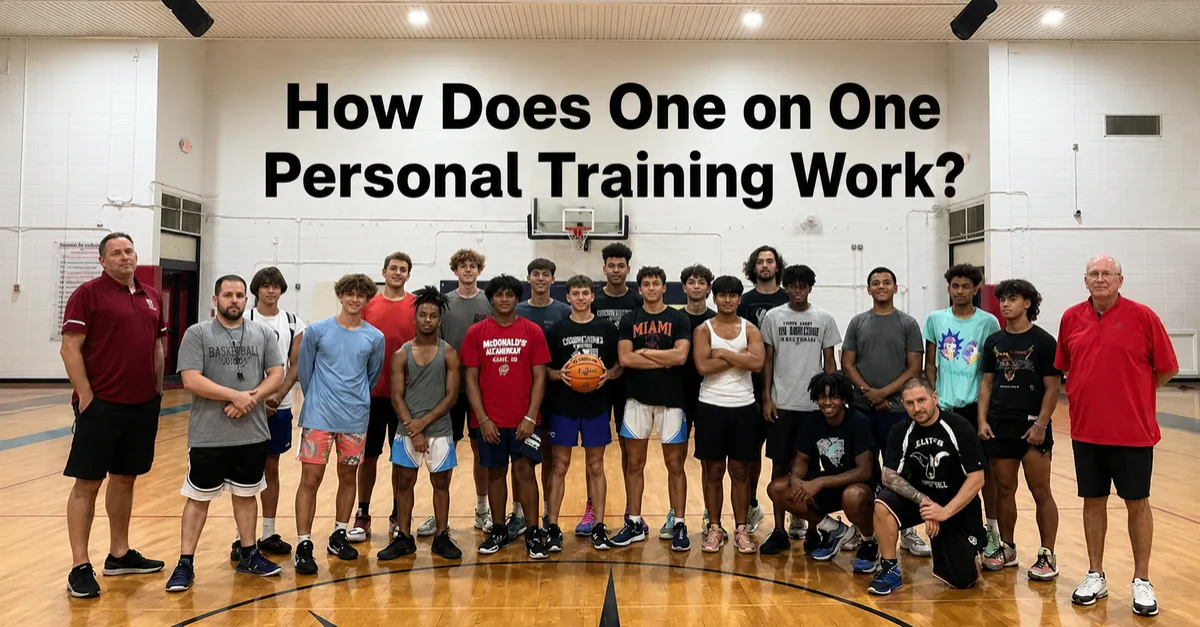
How Does One on One Personal Training Work?
Booking your first session of one on one personal training can feel like a leap of faith if you don't know what's actually happening behind the scenes. Unlike a group drill or a team practice, this format is built entirely around a single athlete's game, weaknesses, and goals. Here's a breakdown of what the process actually looks like, step by step, from the first assessment to the improvements you'll notice weeks later.
See All Gibbons & Gibbons Academy Services
Compare individual training, team sessions, strategy consulting, scouting, and recruiting support.
Explore Training Services →Step One: A Skills and Goals Assessment
Before any drills start, a coach needs a clear read on where you currently stand. Skipping this step is how generic programs end up wasting an athlete's time on things they've already mastered - or worse, missing the gaps that are actually holding them back.
Identifying Strengths and Weaknesses
A short evaluation covers footwork, defensive positioning, shooting mechanics, and basketball IQ, giving the coach a real baseline instead of a guess. From there, the session plan gets built around what the athlete specifically needs to work on. The one-on-one personal training program is designed around this exact starting point, so no two athletes end up following the same script.
Step Two: Building a Custom Training Plan
Once the assessment is done, the next step is turning that information into an actual plan - not a vague list of drills, but a sequence that builds logically session over session.
Tailoring Drills to the Athlete
A guard working on ball-handling under pressure needs a very different plan than a forward working on post moves or defensive rotations. Every drill gets chosen because it targets something specific, not because it fills time on the clock.
Why Individualized Plans Beat Cookie-Cutter Programs
This is really where basketball personal training separates itself from a standard practice format. A packed gym with fifteen other players can't adjust in real time to one athlete's weaknesses, but a one on one setting can shift mid-session the moment a coach spots an issue. For athletes who also want structured team-based reps, the group training sessions offer a useful complement, but the individualized plan stays the core of the one on one format.
What One-on-One Basketball Training Builds Around
The session itself is only one part of a structured athlete-development process.
Step Three: On-Court Coaching and Feedback
This is the part most people picture when they think of personal training, and it's where the real value shows up.
Real-Time Corrections
Instead of waiting until film review days later, a coach can stop a rep mid-motion and correct footwork, hand positioning, or timing on the spot. That immediate feedback loop is what makes changes stick faster than they would in a group setting. At Gibbons & Gibbons Academy, this coaching approach is paired with the same defensive-first philosophy the program is known for, so even offense-focused sessions carry that structured mindset. Athletes looking for a deeper strategic breakdown between sessions can also book a coaching strategy call to review film and game planning in more detail.
Add Scouting and Game Planning to Your Development
Go beyond physical reps with structured analysis of tendencies, matchups, positioning, and game strategy.
Explore Game Planning & Scouting →Step Four: Tracking Progress Over Time
A single great session doesn't mean much without a way to measure whether it's translating into real improvement over weeks and months.
Measuring Improvement Session to Session
Coaches typically revisit the same benchmarks from the initial assessment at regular intervals, comparing footwork speed, shot consistency, or defensive reaction time against where the athlete started. This is where basketball personal training earns its long-term value - the gains compound instead of resetting every session. For athletes with bigger ambitions, that consistent tracking also feeds directly into conversations about exposure and next steps, which is where recruiting support becomes relevant for players aiming at the next level.
Read the Sports Training Academy Guide
Learn what athletes and parents should look for when comparing training environments, coaching, and development programs.
Read the Training Academy Guide →What Makes One on One Training Different
The biggest difference between one on one personal training and every other format comes down to attention. There's no split focus, no waiting your turn, and no drill running longer than it needs to just to keep a group occupied. Every minute on the court is built around one athlete's development. To see the coaching background behind this approach, the about us page covers how the program's philosophy came together and why it's structured the way it is.
Understanding how one on one personal training works takes a lot of the mystery out of booking that first session. It's not just extra attention - it's a structured process of assessment, planning, real-time coaching, and tracked progress that adds up to noticeably sharper play over time.
Explore Gibbons & Gibbons Academy
Learn more about the Academy's basketball development approach, training philosophy, and available athlete support.
Visit Gibbons & Gibbons Academy →FAQs
1. What happens during the first one on one personal training session?
The first session usually starts with a skills and goals assessment covering footwork, shooting mechanics, and basketball IQ, which becomes the baseline for the training plan going forward.
2. How is one on one personal training different from group sessions?
One on one training focuses entirely on a single athlete's specific weaknesses and goals, while group sessions build team chemistry and cover skills at a broader pace across multiple players.
3. How often should an athlete do basketball personal training?
Frequency depends on goals and schedule, but consistent weekly sessions tend to produce more measurable progress than occasional, spaced-out visits.
4. Does one on one training include feedback during the session, or just at the end?
Feedback happens in real time. Coaches correct footwork, positioning, and technique mid-rep rather than waiting until a review after the session is over.
5. Is one on one personal training only for advanced players?
No. The plan is built around wherever the athlete currently stands, so it works just as well for someone building fundamentals as it does for a player refining an advanced skill set.
6. Can one on one training help with college recruiting goals?
Yes. Tracked progress and sharpened skills from personal training sessions often factor directly into recruiting conversations, especially when paired with dedicated recruiting support.
