How Do Training Programs Balance Skill Work and Conditioning?
Every coach has watched it happen. A player looks sharp in a shooting drill, then by the fourth quarter their legs are gone and the footwork falls apart. Good training programs fix that by treating skill and conditioning as one system instead of two separate workouts. The hard part is deciding how much of each a player needs, and when. Get the mix wrong and you end up with a tired shooter or a fit athlete who can't finish a possession. Here's how the balance really works, what it looks like across a week, and what to look for when you compare options.
Why Skill and Conditioning Can't Live in Separate Boxes
Basketball doesn't pause so you can rest before the next skill. A defender closes out, slides for three steps, contests a shot, then sprints back in transition. Every one of those movements needs technique and fuel at the same moment. If a player only practices technique fresh, the technique disappears once fatigue shows up. If a player only runs suicides, they get fit but not any better at the game.
That's why one-on-one sessions like personal training for basketball players often start with technique and then layer in pace and pressure as the session goes on. The player learns the movement first, then practices it while breathing hard.
What Skill Work Actually Builds
Skill work covers the decisions and mechanics of the game: footwork, stance, shot form, ball handling, and reading a screen. It's about repetition with good form. Quality matters more than volume here, because sloppy reps teach sloppy habits.
What Conditioning Actually Builds
Conditioning is your engine. It covers your ability to repeat hard efforts with short recovery, which is exactly what a game asks for. Strong basketball conditioning also protects joints and keeps decision-making sharp late in a game, when tired players tend to gamble and miss assignments.
Want Training Built Around the Player?
Work one-on-one on technique, movement, pace, and game-ready execution.
Explore One-on-One TrainingHow Training Programs Split the Week
There's no single perfect ratio, but most well-designed training programs follow a simple pattern. Early in the week, players do their most technical work while they're fresh. Mid-week, the intensity climbs and skill drills get tied to movement and pace. Late in the week, the load drops so players arrive at games ready to perform.
A rough guide many coaches use is to keep skill work as the main focus and let conditioning ride inside it. Think of it as roughly 60 to 70 percent skill-focused time, with the rest devoted to dedicated conditioning and recovery. That split shifts with the calendar and the player.
A Balanced Basketball Development System
Strong programs connect each part of development instead of treating every session as an isolated workout.
Offseason Versus In-Season Priorities
The offseason is when you build the base. Players can handle longer conditioning blocks and heavier technical changes, like rebuilding a jump shot or learning a new defensive stance. Once games start, the priority flips. Coaches protect legs, keep sessions shorter, and sharpen what already works.
Preseason Ramp-Up
Preseason is the bridge. Volume climbs gradually, and skill drills start to look like real game situations. If a program jumps straight from light offseason work to full-speed scrimmages, injuries and burnout tend to follow.
In-Season Maintenance
During the season, the goal is to hold your fitness, not chase new peaks. Short, sharp sessions keep skills fresh without draining the tank. A player who plays three games a week doesn't need another hour of running on top of it.
Train With Competitive Pace and Purpose
Group sessions give athletes a place to practice skills, movement, and decision-making against real pressure.
View Group & Team SessionsBuilding Conditioning Into the Skill Work
The smartest way to balance skill work and basketball conditioning is to stop separating them. Instead of finishing practice with a lap-based punishment, coaches build conditioning right into the drills. Players work on technique while their heart rate is already up, so the skill holds up when the game gets loud.
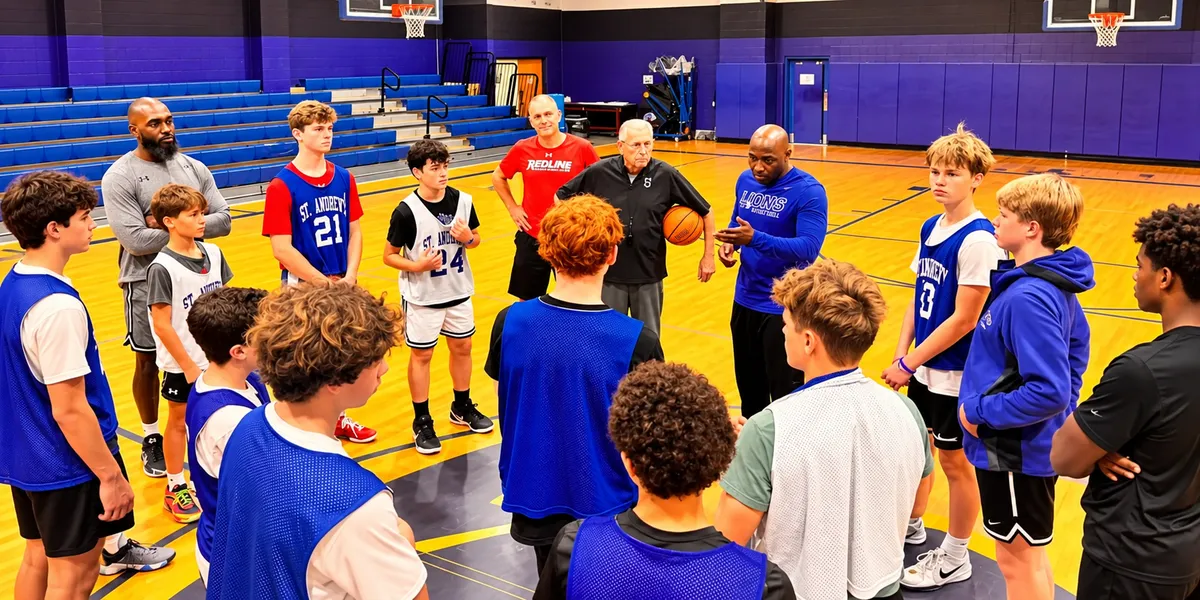
Team settings make this easy. In group training and team sessions, drills like continuous close-out rotations or full-court defensive slides double as technique work and a serious workout. Nobody is standing around, and everyone is being asked to make decisions while tired.
Conditioned Skill Drills That Work
Here are a few formats that combine both goals:
- Timed shell drill rounds with a short rest, so players rotate hard for 30 to 45 seconds, then reset.
- Close-out and recover sequences, where a player closes out, slides, and then sprints to the next spot.
- Shooting off fatigue, where a player finishes a movement circuit and immediately takes game-speed shots.
A Simple Example: Close-Out and Recover
Set a player at the baseline. On the coach's signal, they sprint to close out on a shooter, slide for three steps, then run back to the start. Repeat for six rounds with a 30-second break. The player practices stance, hand position, and footwork, and gets a real conditioning stimulus without a single lap.
Reading the Player, Not Just the Calendar
Schedules give you a starting point, but every athlete is different. A guard who plays 30 minutes a night carries a different load than a big man who's still growing into his frame. Good programs check in on things like sleep, soreness, and how a player looks in the last five minutes of practice, then adjust the mix.
This is where coaching experience shows. At Gibbons & Gibbons Academy, the focus stays on defensive fundamentals, so conditioning is always tied to a real basketball purpose instead of being random hard work. That approach keeps players fit for the exact movements they'll need on the court.
Film helps too. When you break down a real game through game planning and scouting sessions, you can see when a player's effort or positioning fades. That tells a coach whether the fix is more conditioning, cleaner technique, or a smarter role on the floor.
Want to See What the Film Is Telling You?
Use game planning and scouting sessions to identify where technique, positioning, or conditioning starts to break down.
Explore Game Planning & ScoutingSigns Your Balance Is Off
If a player's form falls apart in the final minutes, they probably need more conditioning inside their skill work. If they're fit but still make the same mistakes, they need more focused technique. If they're constantly sore and flat, the program may be doing too much of both.
Advice from an experienced voice can save months of guesswork. A coaching call for strategy and planning is a good way to map a training plan to a player's goals and schedule. And for athletes chasing the next level, recruiting support helps connect the training work to what college coaches actually want to see.
Putting It Together
The best balance is the one that fits your player, your season, and your goals. Start with quality skill work, build conditioning into it, and adjust based on how the player performs when tired. Then check the results in games, not just in the gym. If one of the training programs you're weighing can explain why each drill is there, you're probably in good hands. Ask the question at your next session and see how the coach answers.
Need a Clearer Training Strategy?
Talk through the player's goals, schedule, weaknesses, and next steps with an experienced coach.
Book a Strategy Coaching CallFAQs
1. How much conditioning should basketball players do each week?
It depends on the season and the player, but most athletes do best with two to three focused conditioning sessions in the offseason and one or two in-season. Many of those can be built into skill drills. The goal is to match what a game demands, not to run as much as possible.
2. Should you do skill work before or after conditioning?
Do the technical skill work first while you're fresh, so you can learn good form. Then add conditioned skill drills later in the session to test that form under fatigue. Doing both in that order gives you cleaner reps and a more game-like finish.
3. Can conditioning hurt your shooting?
It can if you take too many shots on dead legs and let your form slip. Shooting off light fatigue is useful because games are tiring. Once your mechanics start to break down, stop and rest so you don't ingrain bad habits.
4. How do youth and high school players differ in how they train?
Younger players need more movement skills and fun, game-based drills, with lighter conditioning loads. High school and college players can handle more structured conditioning and higher intensity. Growth spurts and school workloads should always shape how hard you push.
5. How long does it take to see results from a balanced plan?
Most players notice better stamina and cleaner footwork within four to six weeks of consistent work. Bigger changes, like a rebuilt shot or a new defensive stance, usually take a few months. Consistency matters more than any single tough workout.
6. What's the best way to know if a program is well balanced?
Ask how the coach decides what to emphasize each week and how they adjust for game schedules. A good coach can explain the reason behind each block. Also watch whether players look sharp late in games, since that's the clearest sign the balance is working.
